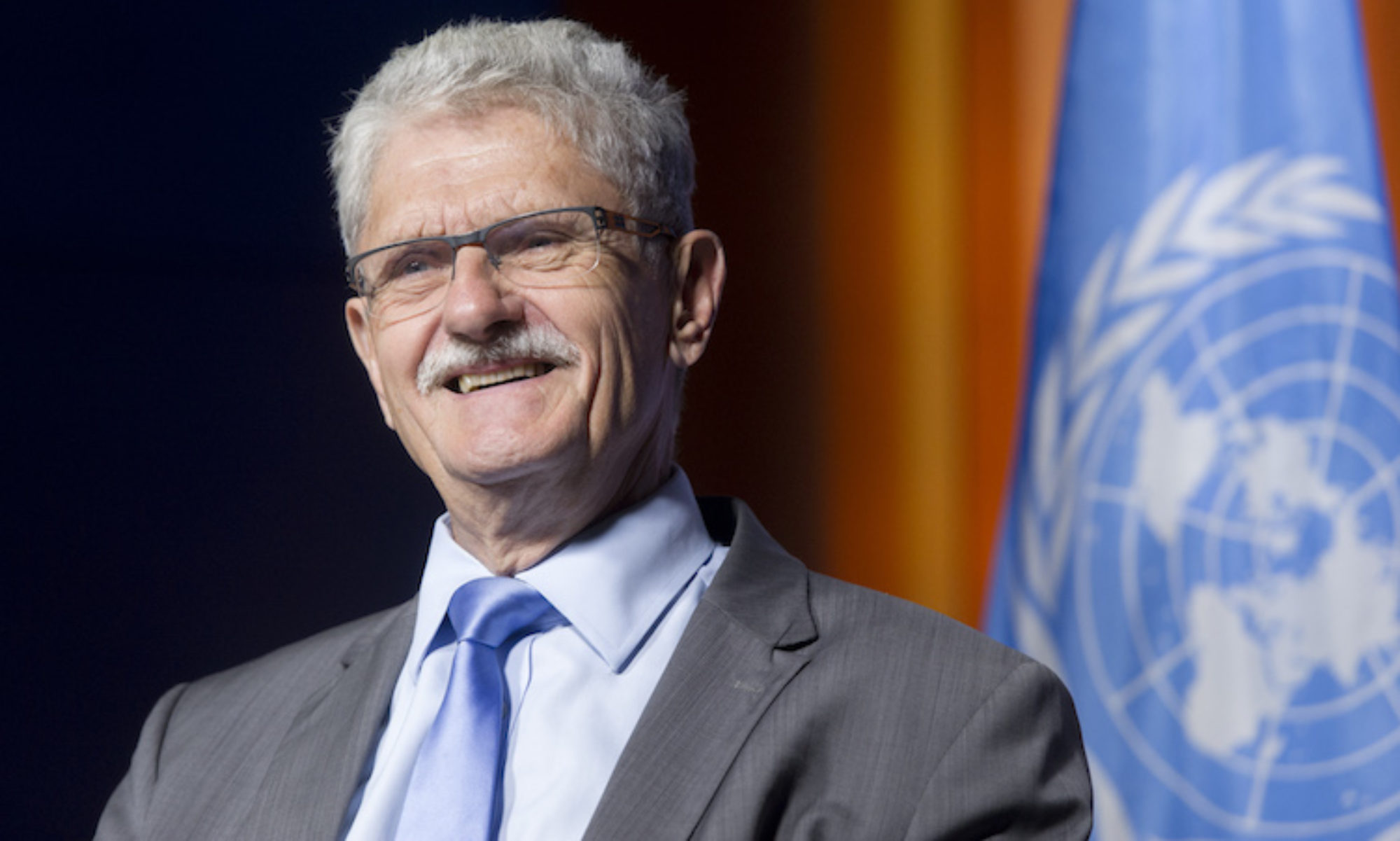

My speech at the Danish veterans’ memorial ceremony at Kastellet in Copenhagen, marking the 25th anniversary of the terrorist attacks in New York on September 11, 2001.
Speech:
To lay a wreath right here, at Kastellet (well preserved fortification of Copenhagen, which to this day serves as military barracks) for those who died in our international missions is a both moving and thought-provoking experience.
Particularly today, on the anniversary of the massive and horrific terrorist attack on the USA on September 11th, 2001, an event that defined a new international agenda and proved pivotal for the overseas deployments in which so many Danes participated.
My deepest respect for those of you who had the strength and courage to risk your lives when your country asked you to do so.
I understand the profound pain felt by those who lost a spouse, a father, a mother, or a friend serving as a Danish soldier on deployed missions — most notably in Afghanistan.
I understand the pain of those who returned with severe and lasting injuries to body and soul.
And I share the anger felt when the current US president falsely claims that our soldiers remained in the background while the USA bore the brunt of the hard fighting and casualties.
Added to this is the anger over threats to forcibly take over a part of the Kingdom of Denmark — Greenland — after we have been one of the USA’s most loyal allies in the overseas wars of this century.
Therefore, I have two messages.
Firstly:
We must never skimp on, nor forget, the support that many veterans will need for years to come.
Secondly:
Looking back, we can see that there were many misjudgments and wrong decisions — both in the USA and here at home — because politicians and military leaders blindly followed the US.
It is obvious that you have the right to demand that all cards be put on the table regarding what drove the political decisions, what we actually knew about the situation on the ground— and whether we ignored warnings, such as those that the then-Chief of Defence says he made in 2008 .
Politicians must acknowledge and make public what they said in confidence to the Foreign Policy Committee. That confidentiality was not for our personal sakes, but for the sake of the country’s security and the safety of the deployed soldiers. And the intelligence services have determined that none of these concerns apply any longer.
So, bravo! and thank you for the citizens’ initiative in this matter; it has set the record straight and broken down the final resistance to acknowledging one’s own statements in the Committee (note: several Danish politicians demanded anonymity in an inquiry into Denmark’s engagement in Afghanistan. A veteran made a citizens’ proposal aimed at ensuring transparency. The proposal was supported by over 50.000 citizens and thus reached parliament. This made the last politicians give up their reluctance to stand by what they had said in the Foreign Policy Committee).
We were in Afghanistan with good reason and in solidarity with the US — because those responsible for Al-Qaeda’s terrorist attacks on September 11, 2001, were hiding there. Also, we were there with a UN recommendation. However, our mission did not take the form I had proposed during the brief time I remained Foreign Minister — that of a UN peacekeeping force in Kabul. Instead, it became a bloody war effort.
We succeeded in defeating and splintering the terrorist organization Al-Qaeda, and Osama bin Laden was consigned to the bottom of the ocean. But our state-building project collapsed disastrously five years ago — following the withdrawal agreement President Trump struck with the Taliban during his first term, bypassing the very government we had all fought to build in Afghanistan.
We were in Iraq—as the then-Prime Minister Anders Fogh Rasmussen told me — because it is always in Denmark’s interest to align with the sitting US president. As Leader of the Opposition at the time, I disagreed: there was still time for UN weapons inspectors to verify the validity of the justification for the war — namely, the claim regarding weapons of mass destruction. The vast majority within the UN and the Security Council opposed the war. Furthermore, there was no evidence of any collusion between Saddam Hussein and the 9/11 terrorists. The invasion — along with the manner in which Iraq’s administration and military were dismantled and the occupation conducted — led to bloody warfare and civil strife, and fuelled the rise of the terrorist organisation ISIS. Today, we also know that there were no weapons of mass destruction in Iraq. The Iraq War was neither legitimate nor successful.
There is a need for reflection—including among us, whose doubts had already begun to surface while events were unfolding:
Did the political decision-makers act with due deliberation — both in the US and in the countries that blindly followed the US lead?
Should the war on terror have been — and could it have been — won militarily? Or was it better served by the highly effective international intelligence and police cooperation that was established — cooperation that thwarted countless terrorist plots we never even heard about, including here in Denmark?
Could the wars justify the immense loss of life — losses that affected us deeply, and which took a far heavier toll on local Afghans and claimed the lives of hundreds of thousands of Iraqis and other Arabs across the various conflicts that stemmed from George W. Bush’s invasion of Iraq?
These realisations, combined with our experiences with the current US president, mean that we will hardly see a Danish prime minister repeat the justification Anders Fogh used for going to war alongside the US.
Yet, regardless of such reflection or the outcome of the overseas wars in which we participated, we must — and will — all honor your heroic service on Denmark’s behalf. We insist that you be treated with the greatest respect and receive every form of support you need following these incredibly harrowing experiences.
Speech made at Kastellet on sept. 11th 2026
Other articles by me in English