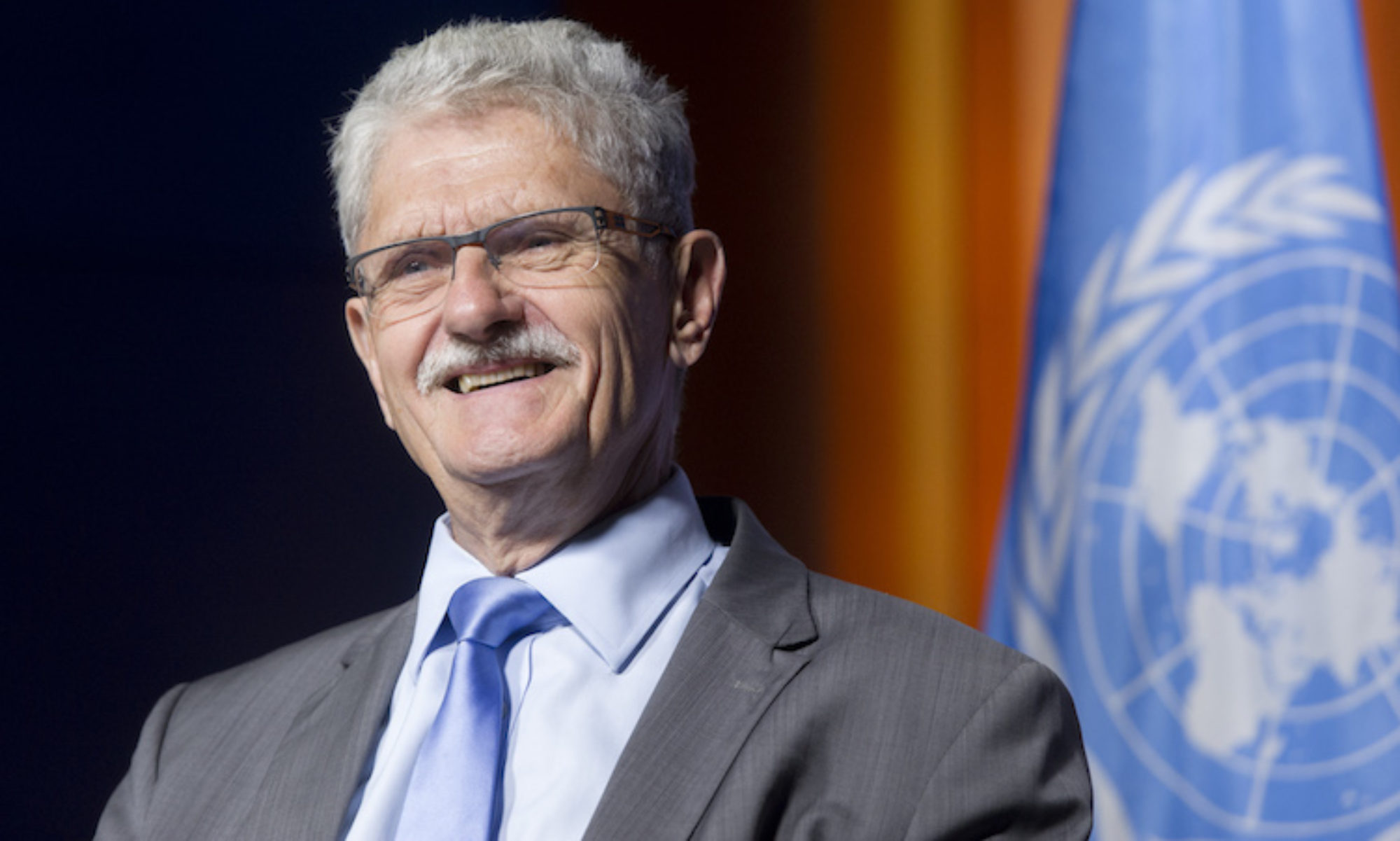
Speech for Danish Veterans on 9/11

My speech at the Danish veterans’ memorial ceremony at Kastellet in Copenhagen, marking the 25th anniversary of the terrorist attacks in New York on September 11, 2001.

Speech:


To lay a wreath right here, at Kastellet (well preserved fortification of Copenhagen, which to this day serves as military barracks) for those who died in our international missions is a both moving and thought-provoking experience.

Particularly today, on the anniversary of the massive and horrific terrorist attack on the USA on September 11th, 2001, an event that defined a new international agenda and proved pivotal for the overseas deployments in which so many Danes participated.

My deepest respect for those of you who had the strength and courage to risk your lives when your country asked you to do so.

I understand the profound pain felt by those who lost a spouse, a father, a mother, or a friend serving as a Danish soldier on deployed missions — most notably in Afghanistan.

I understand the pain of those who returned with severe and lasting injuries to body and soul.

And I share the anger felt when the current US president falsely claims that our soldiers remained in the background while the USA bore the brunt of the hard fighting and casualties.

Added to this is the anger over threats to forcibly take over a part of the Kingdom of Denmark — Greenland — after we have been one of the USA’s most loyal allies in the overseas wars of this century.

Therefore, I have two messages.

Firstly:

We must never skimp on, nor forget, the support that many veterans will need for years to come.

Secondly:

Looking back, we can see that there were many misjudgments and wrong decisions — both in the USA and here at home — because politicians and military leaders blindly followed the US.

It is obvious that you have the right to demand that all cards be put on the table regarding what drove the political decisions, what we actually knew about the situation on the ground— and whether we ignored warnings, such as those that the then-Chief of Defence says he made in 2008 .

Politicians must acknowledge and make public what they said in confidence to the Foreign Policy Committee. That confidentiality was not for our personal sakes, but for the sake of the country’s security and the safety of the deployed soldiers. And the intelligence services have determined that none of these concerns apply any longer.

So, bravo! and thank you for the citizens’ initiative in this matter; it has set the record straight and broken down the final resistance to acknowledging one’s own statements in the Committee (note: several Danish politicians demanded anonymity in an inquiry into Denmark’s engagement in Afghanistan. A veteran made a citizens’ proposal aimed at ensuring transparency. The proposal was supported by over 50.000 citizens and thus reached parliament. This made the last politicians give up their reluctance to stand by what they had said in the Foreign Policy Committee).

We were in Afghanistan with good reason and in solidarity with the US — because those responsible for Al-Qaeda’s terrorist attacks on September 11, 2001, were hiding there. Also, we were there with a UN recommendation. However, our mission did not take the form I had proposed during the brief time I remained Foreign Minister — that of a UN peacekeeping force in Kabul. Instead, it became a bloody war effort.

We succeeded in defeating and splintering the terrorist organization Al-Qaeda, and Osama bin Laden was consigned to the bottom of the ocean. But our state-building project collapsed disastrously five years ago — following the withdrawal agreement President Trump struck with the Taliban during his first term, bypassing the very government we had all fought to build in Afghanistan.

We were in Iraq—as the then-Prime Minister Anders Fogh Rasmussen told me — because it is always in Denmark’s interest to align with the sitting US president. As Leader of the Opposition at the time, I disagreed: there was still time for UN weapons inspectors to verify the validity of the justification for the war — namely, the claim regarding weapons of mass destruction. The vast majority within the UN and the Security Council opposed the war. Furthermore, there was no evidence of any collusion between Saddam Hussein and the 9/11 terrorists. The invasion — along with the manner in which Iraq’s administration and military were dismantled and the occupation conducted — led to bloody warfare and civil strife, and fuelled the rise of the terrorist organisation ISIS. Today, we also know that there were no weapons of mass destruction in Iraq. The Iraq War was neither legitimate nor successful.

There is a need for reflection—including among us, whose doubts had already begun to surface while events were unfolding:

Did the political decision-makers act with due deliberation — both in the US and in the countries that blindly followed the US lead?

Should the war on terror have been — and could it have been — won militarily? Or was it better served by the highly effective international intelligence and police cooperation that was established — cooperation that thwarted countless terrorist plots we never even heard about, including here in Denmark?

Could the wars justify the immense loss of life — losses that affected us deeply, and which took a far heavier toll on local Afghans and claimed the lives of hundreds of thousands of Iraqis and other Arabs across the various conflicts that stemmed from George W. Bush’s invasion of Iraq?

These realisations, combined with our experiences with the current US president, mean that we will hardly see a Danish prime minister repeat the justification Anders Fogh used for going to war alongside the US.

Yet, regardless of such reflection or the outcome of the overseas wars in which we participated, we must — and will — all honor your heroic service on Denmark’s behalf. We insist that you be treated with the greatest respect and receive every form of support you need following these incredibly harrowing experiences.

Speech made at Kastellet on sept. 11th 2026

Other articles by me in English

Danish veterans gather in silent protest at US embassy

Many Americans have had enough. And now European governments must show active solidarity with Palestine

Will Trump finally bring Netanyahu to heel over Gaza? Will a changed – and more critical – public mood in the US gain political significance? Europe must step up. Danish Prime Minister, Mette Frederiksen must understand that Israel is not an outpost of democracy, but apartheid and massive oppression.

This is a translation of my commentary in Danish on Palestine in the Danish magazine Ræson on Aug 10th, 2026.

Commentary by Mogens Lykketoft, former Foreign Minister of Denmark and President of the UN General Assembly

Ten months ago, Trump got a plan approved to stop the war in Gaza. Unfortunately, the plan’s main consequence so far has been that the media have lost interest in covering the horrors the Palestinians continue to live under. Once again, there is also less attention on the active efforts of Israel’s current rulers to prevent, at any cost, the establishment of a Palestinian state—which the UN has demanded in vain for 80 years – and rather to drive the Palestinians as far as possible out of their homeland.

The crisis continues – in silence

It was in October last year that the American president received massive praise and applause from much of the world’s leadership for his plan. The UN Security Council approved the plan and had to leave it to Trump’s new “Peace Council” to carry it out. The agreement was that there would be a ceasefire and free access to supplies for the civilian population, who had lived through hell for two years and seen 75,000 killed and twice as many wounded or permanently disabled. The plan called for Hamas to be disarmed, accompanied by the establishment of a civilian Palestinian administration and an international peace force, and a starting an Israeli withdrawal from all of Gaza.

Most of the state leaders who applauded the American president’s peace plan probably had only the slimmest hope that he would maintain focus and put the necessary pressure on his close ally Netanyahu and his extremist partners in government. That doubt was unfortunately fully confirmed: Israel has since systematically undermined the agreement and continued to make life horrific for the Palestinian civilian population. According to the Palestinian Ministry of Health in Gaza, 1,255 Palestinians – many of them children and aid workers – have been killed by Israeli forces since the so-called peace was announced (figures as of 8/7 2026).

The Israelis have seized an ever-larger share of the small territory of Gaza and destroyed the remaining buildings in the occupied area. More than two million Palestinians are now crammed into the ruins of a completely destroyed society. They live in a prison camp the size of one third of the small Danish island of Langeland under wretched and unhygienic conditions, hunger and disease being daily realities. The Israelis have blocked the agreed access to necessary supplies of food, water, medicine, and tents, and sabotage aid efforts from outside, according to, for example, Human Rights Watch. In particular, Israel is waging war against UNRWA, the UN’s historic effort to maintain a bearable existence for Palestinians in Gaza and the West Bank.

Will Trump say no to Netanyahu?

A couple of weeks ago, Trump’s so-called peace council finally met and produced a more concrete elaboration of the peace plan. A heavily weakened Hamas declared itself willing to hand over its weapons at the same pace as the rest of the plan was implemented. But no -entirely predictably – Netanyahu’s government rejected the proposal, while continuing the barbaric ethnic cleansing in the West Bank, and the mass imprisonment and torture of Palestinian prisoners.

Will Trump finally put pressure on Israel, then? Hardly out of concern for the victims of Israeli war crimes. But reportedly, he is angry that he let himself be lured by Netanyahu into starting an offensive war against Iran, which is hurting him politically at home. The war is also greatly damaging for peace and development throughout the Middle East, the global economy in general, and the world’s poorest countries in particular.

When, occasionally, Trump tries to stop the Iran war, he is also aware that he must try to prevent Israel from levelling to the ground large residential districts in Beirut and many villages in southern Lebanon using the same modus operandi as in Gaza. Since March 2nd, Israel has killed 4,300 people in Lebanon according to the UN, and hundreds of thousands have become internally displaced. In a rare moment of clarity, a few weeks ago Trump said that Netanyahu did not need to knock down entire residential blocks in Lebanon and kill many civilians in order to hit a single opponent. Why didn’t he say that when the war in Gaza began?

The great American shift in opinion

At the same time, Vice President J.D. Vance made the Israelis aware that the US will soon be the country’s only remaining friend in the world! It is thus becoming ever clearer that there is a conflict of interest between Netanyahu and the US government:

It is not in the US’s interest to have even more geopolitical instability, which could very well be the result if Israel chooses to break up neighbouring countries like Syria, Lebanon, and Iran into fragments torn by civil war.

The mass killing of civilians in Gaza has shifted American public opinion, so that more people sympathize with Palestine and fewer with Israel – significantly so among the younger generation. This is resonating in the American election campaign, where Netanyahu’s wealthy friends in the lobbying organization AIPAC are finding it much harder than before to buy friends in the US Congress. In both major parties, a revolt is underway against decades of unconditional American support, regardless of how aggressively the state of Israel develops. It is telling that even in the world’s second-largest Jewish city, New York City, voters elected a new progressive, Muslim mayor who is critical of Israel’s policies—even with support from a large share of Jewish voters.

Attitudes toward Israel have also shifted dramatically in European public opinion. It reminds me, an old man, of the mobilization many of us as young people took part in against the US war in Vietnam. That was a protest which was to a great extent inspired by our peers in the US and which—albeit far too slowly—helped bring the war to an end.

An appeal to the European governments

We must maintain our engagement, even though the worst of the bombardment of Palestine is over. It is good that the governments of Norway, Ireland, Spain, the Netherlands, and others are speaking out clearly. It is also shifting in the UK and France. But an EU-wide response is being blocked by a Germany that, in its shame over Hitler’s horrifying genocide against the Jews, uncritically allows the State of Israel to carry out what, unfortunately, under any reasonable interpretation of international law, must be described as genocide.

It is feeble to only be able to agree on sanctions against a handful of violent settlers and settler goods, when everyone knows that the whole thing is directed and desired by Israel’s government.

Some European governments – including Denmark’s – have only moved from uncritical support of Israel’s “right to self-defence” to reactions against Israeli war crimes, far more muted than the reaction to Putin’s crimes in Ukraine.

One reason for the low profile of some European governments is the fear of challenging Trump, because they still hope – for our own safety – to maintain the US as a bulwark against Russian aggression in Ukraine. But the cost of this kind of pragmatism is that it brands us with double standards in much of the world.

This low profile is also supported by the fatalistic attitude that it is impossible to change the one decisive factor – the US’s unconditional backing of the State of Israel, which has made this state increasingly aggressive. This backing is indeed the result of many years of American politicians’ dependence on money from a few far-right Jewish billionaires, from AIPAC and the arms industry, and support among the Bible Belt’s evangelical Christian fundamentalists, who have become Trump’s core voters.

But this fatalism is probably misplaced in light of the new dynamic in American politics described above.

Face the realities

Another reason for the silence – or even defence of the State of Israel’s actions – is a lack of historical awareness and unwillingness to face today’s realities: My most fundamental disagreement with my old comrade-in-arms (Denmark’s prime minister) Mette Frederiksen is that for far too long – perhaps as a gut reaction of her aversion to Arab and Muslim immigration – she has clung to an image of Israel as an outpost of Western civilization, a democratic outpost in the Middle East that keeps the “savage Arabs” in check and prevents them from driving the Jews into the Mediterranean. But Israel is an occupying power and an apartheid state that violently oppresses and displaces Palestinians in the area it controls.

It is by no means a defence of Hamas’ terrorist attack on October 7, 2023, to point out that the conflict began at least 80 years ago, and that the people of Palestine have been subjected to endless abuses – displacement, ethnic cleansing, and occupation. All of their peace-seeking leaders have been deceived and discredited among their own people, because there was never any progress – only new setbacks and new humiliations. Terror is unacceptable – including state terror. Today, Netanyahu is the worst terrorist in the entire long conflict.

It is an outrage that, at political request, Denmark’s Director of Public Prosecutions brought a series of cases after Hamas’ attack, charging Danish citizens who had shown sympathy for the Palestinians – although hardly for Hamas’s terror – with supporting terrorism. Fortunately, the Supreme Court dismissed some of these dubious cases.

By far most of the Middle East’s countless conflicts over more than a hundred years have had two sources: Western great powers wanting to gain or maintain control of the region’s resources; And a United States that – for domestic political reasons – has one-sidedly supported the State of Israel, regardless of how aggressive it has become.

In the Middle East, Palestine is not “the mother of all conflicts.” But an important precondition for lowering the level of conflict in the region is that a solution be reached – with peace, rights, and access to a decent existence for the Palestinians. That is also why there is a need for us to engage far more forcefully in their cause. ■

Mogens Lykketoft (b. 1946) is an economist, graduated from University of Copenhagen (1971) and was a member of the Danish Parliament (Folketinget) 1981–2019, Minister of Taxation 1981–82, and Minister of Finance and Foreign Affairs 1993–2001, party chairman 2002–2005, including as prime ministerial candidate in the 2005 election. Speaker of the Folketing 2011–2015. President of the UN General Assembly 2015–2016. He wrote his first article for RÆSON on October 28, 2002.

ILLUSTRATION: Gaza, January 29, 2025 [photo: Jaber Jehad Badwan/Wikimedia Commons]

Other articles by Mogens Lykketoft in English