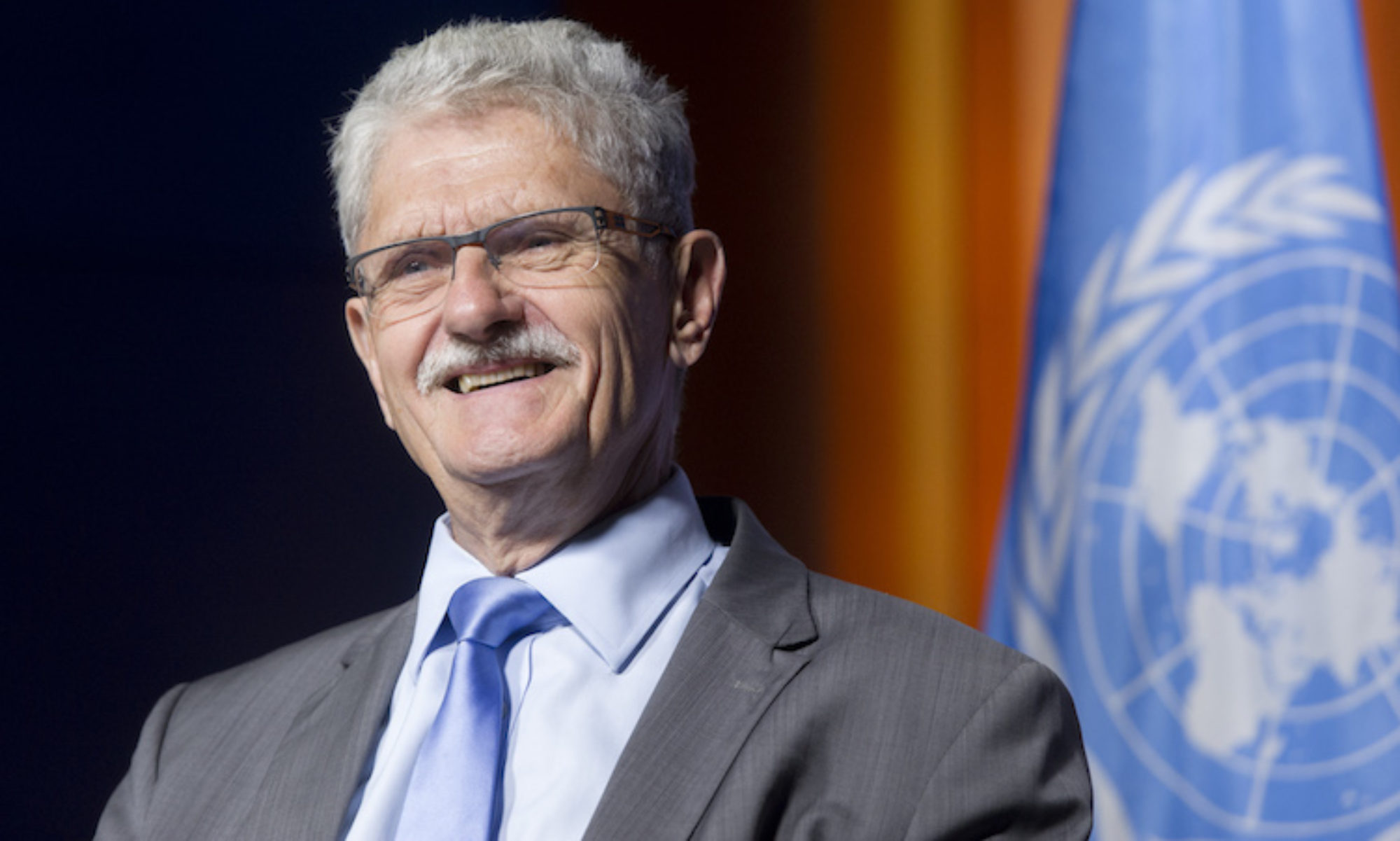
Speech for Danish Veterans on 9/11

My speech at the Danish veterans’ memorial ceremony at Kastellet in Copenhagen, marking the 25th anniversary of the terrorist attacks in New York on September 11, 2001.

Speech:


To lay a wreath right here, at Kastellet (well preserved fortification of Copenhagen, which to this day serves as military barracks) for those who died in our international missions is a both moving and thought-provoking experience.

Particularly today, on the anniversary of the massive and horrific terrorist attack on the USA on September 11th, 2001, an event that defined a new international agenda and proved pivotal for the overseas deployments in which so many Danes participated.

My deepest respect for those of you who had the strength and courage to risk your lives when your country asked you to do so.

I understand the profound pain felt by those who lost a spouse, a father, a mother, or a friend serving as a Danish soldier on deployed missions — most notably in Afghanistan.

I understand the pain of those who returned with severe and lasting injuries to body and soul.

And I share the anger felt when the current US president falsely claims that our soldiers remained in the background while the USA bore the brunt of the hard fighting and casualties.

Added to this is the anger over threats to forcibly take over a part of the Kingdom of Denmark — Greenland — after we have been one of the USA’s most loyal allies in the overseas wars of this century.

Therefore, I have two messages.

Firstly:

We must never skimp on, nor forget, the support that many veterans will need for years to come.

Secondly:

Looking back, we can see that there were many misjudgments and wrong decisions — both in the USA and here at home — because politicians and military leaders blindly followed the US.

It is obvious that you have the right to demand that all cards be put on the table regarding what drove the political decisions, what we actually knew about the situation on the ground— and whether we ignored warnings, such as those that the then-Chief of Defence says he made in 2008 .

Politicians must acknowledge and make public what they said in confidence to the Foreign Policy Committee. That confidentiality was not for our personal sakes, but for the sake of the country’s security and the safety of the deployed soldiers. And the intelligence services have determined that none of these concerns apply any longer.

So, bravo! and thank you for the citizens’ initiative in this matter; it has set the record straight and broken down the final resistance to acknowledging one’s own statements in the Committee (note: several Danish politicians demanded anonymity in an inquiry into Denmark’s engagement in Afghanistan. A veteran made a citizens’ proposal aimed at ensuring transparency. The proposal was supported by over 50.000 citizens and thus reached parliament. This made the last politicians give up their reluctance to stand by what they had said in the Foreign Policy Committee).

We were in Afghanistan with good reason and in solidarity with the US — because those responsible for Al-Qaeda’s terrorist attacks on September 11, 2001, were hiding there. Also, we were there with a UN recommendation. However, our mission did not take the form I had proposed during the brief time I remained Foreign Minister — that of a UN peacekeeping force in Kabul. Instead, it became a bloody war effort.

We succeeded in defeating and splintering the terrorist organization Al-Qaeda, and Osama bin Laden was consigned to the bottom of the ocean. But our state-building project collapsed disastrously five years ago — following the withdrawal agreement President Trump struck with the Taliban during his first term, bypassing the very government we had all fought to build in Afghanistan.

We were in Iraq—as the then-Prime Minister Anders Fogh Rasmussen told me — because it is always in Denmark’s interest to align with the sitting US president. As Leader of the Opposition at the time, I disagreed: there was still time for UN weapons inspectors to verify the validity of the justification for the war — namely, the claim regarding weapons of mass destruction. The vast majority within the UN and the Security Council opposed the war. Furthermore, there was no evidence of any collusion between Saddam Hussein and the 9/11 terrorists. The invasion — along with the manner in which Iraq’s administration and military were dismantled and the occupation conducted — led to bloody warfare and civil strife, and fuelled the rise of the terrorist organisation ISIS. Today, we also know that there were no weapons of mass destruction in Iraq. The Iraq War was neither legitimate nor successful.

There is a need for reflection—including among us, whose doubts had already begun to surface while events were unfolding:

Did the political decision-makers act with due deliberation — both in the US and in the countries that blindly followed the US lead?

Should the war on terror have been — and could it have been — won militarily? Or was it better served by the highly effective international intelligence and police cooperation that was established — cooperation that thwarted countless terrorist plots we never even heard about, including here in Denmark?

Could the wars justify the immense loss of life — losses that affected us deeply, and which took a far heavier toll on local Afghans and claimed the lives of hundreds of thousands of Iraqis and other Arabs across the various conflicts that stemmed from George W. Bush’s invasion of Iraq?

These realisations, combined with our experiences with the current US president, mean that we will hardly see a Danish prime minister repeat the justification Anders Fogh used for going to war alongside the US.

Yet, regardless of such reflection or the outcome of the overseas wars in which we participated, we must — and will — all honor your heroic service on Denmark’s behalf. We insist that you be treated with the greatest respect and receive every form of support you need following these incredibly harrowing experiences.

Speech made at Kastellet on sept. 11th 2026

Other articles by me in English

Danish veterans gather in silent protest at US embassy

Tale til veteranerne på Kastellet

Min tale til de danske veteraners mindehøjtidelighed på Kastellet i København i anledningen af 25-året for terrorangrebet i New York 11. september 2001.

Talen

Det er bevægende og tankevækkende at lægge en krans for dem, der døde i vores internationale missioner. 

Især ruller tankerne her på 25 års dagen for det gigantiske og forfærdende terrorangreb mod USA 11. september 2001, som definerede en ny international dagsorden og blev afgørende for de oversøiske udsendelser, så mange danske kom til at deltage i.

Jeg har dyb respekt for jer, der havde styrke og mod til at sætte livet på spil, når jeres land bad jer om det.

Jeg forstår den vældige smerte hos dem der mistede en ægtefælle, en far, en mor eller en ven som dansk soldat i udsendte missioner – flest i Afghanistan

Jeg forstår smerten hos dem, der kom retur med store og vedvarende skader på legeme og sjæl.

Og jeg deler vreden, når USA’s nuværende præsident løgnagtigt påstår, at vores soldater stod i baggrunden, men USA tog de hårde kampe og tab.  

Dertil kommer vreden over truslerne om med magt af overtage en del af Kongeriget Danmark – Grønland – efter at vi har været en af de allermest loyale allierede med USA i de oversøiske krige i dette århundrede.

Derfor har jeg to budskaber

For det første: 

Vi må aldrig fedte med eller glemme den bistand, en stor del af veteranerne har brug for mange år frem

For det andet:

I bakspejlet kan vi konstatere, at der var mange fejlbedømmelser og forkerte beslutninger – i USA, men også herhjemme, fordi politikere og militære ledere så slavisk fulgte USA.

Det er indlysende, at I må forlange kortene på bordet om, hvad der drev de politiske beslutninger, hvad vi egentlig vidste om situationen på jorden – og om vi ignorerede advarsler som f.eks. dem, den daværende forsvarschef siger, han kom med i 2008.  

Politikere skal vedkende sig og offentliggøre også hvad de sagde i Udenrigspolitisk Nævn i fortrolighed. Fortroligheden var nemlig ikke for vores personlige skyld, men af hensyn til landets og de udsendte soldaters sikkerhed. Og Efterretningstjenesterne har fastslået, at ingen af disse hensyn gælder længere. 

Så bravo og tak for borgerinitiativet i denne sag, der har sat tingene på plads og nedbrudt den sidste modstand mod at vedkende sig sine udtalelser.

Vi var i Afghanistan med god grund og i solidaritet med USA – fordi de ansvarlige for Al Qaedas terrorangreb 11. september 2001 skjulte sig derude. Vi var der også med anbefaling fra FN. Men vores indsats blev ikke, som jeg foreslog i den korte tid, jeg stadigvæk var udenrigsminister – i form af FN-fredsstyrke i Kabul. I stedet blev det en meget blodig krigsindsats.

Vi fik nedkæmpet og splintret terrororganisation Al Qaeda, og Osama Bin Laden blev sænket til havets bund. Men vort statsbygningsprojektet kollapsede katastrofalt for 5 år siden – efter den aftale præsident Trump i sin første præsidentperiode lavede med Taliban om tilbagetrækning hen over hovedet på den regering, vi alle havde kæmpet for at opbygge i Afghanistan.

Vi var i Irak, som den daværende statsminister Anders Fogh Rasmussen sagde til mig, fordi det altid er dansk interesse at følge den til enhver tid siddende amerikanske præsident. Som oppositionsleder dengang var jeg uenig: Der var tid til for FN’s våbeninspektører at afklare, om selve krigsbegrundelsen, nemlig påstanden om masseødelæggelsesvåben, var korrekt. Det store flertal i FN og Sikkerhedsrådet var imod krigen. Og intet tydede på noget samspilmellem Saddam Hussein og terroristerne fra 11. september. Invasionen – og den måde, man demonterede Iraks forvaltning og militær på og udfoldede besættelsen på – førte til blodig krig og borgerkrig og nærede opkomsten af terrororganisationen ISIS. Og vi ved i dag, at der ikke var masseødelæggelsesvåben i Irak.  Irak-krigen var hverken legitim eller vellykket.

Der er brug for eftertanke – også hos os, hvor tvivlen allerede blomstrede undervejs:

Handlede de politiske beslutningstagere velovervejet – i USA og i de lande, der slavisk fulgte med USA?  

Skulle og kunne krigen mod terror vindes militært – eller mere gennem det meget effektive efterretnings- og politisamarbejde, der blev opbygget internationalt, og som har forhindret utallige terrorplaner, vi aldrig hørte om – også her i Danmark.

Kunne krigene retfærdiggøre de vældige tab af menneskeliv, der ramte os selv, og mange, mange gange mere ramte de lokale afghanere, og dræbte hundredtusinder irakere og andre arabere i alle de konflikter, der voksede ud af George W. Bushs invasion i Irak.

Disse erkendelser og oplevelsen med den nuværende amerikanske præsident betyder nok, at vi ikke får en dansk statsminister, der gentager Anders Foghs begrundelse for at gå i krig sammen med USA.

Men uanset eftertanken og udfaldet af de oversøiske krige, vi deltog i , skal og vil vi alle  hylde jeres heroiske indsats på Danmarks vegne og insistere på at I behandles med stor respekt og får enhver håndsrækning, I har brug for efter disse utroligt barske oplevelser.

Tale til de danske veteraner på Kastellet i København 11. septemer 2026

Mere fra min hånd om Afghanistan og Irak

My Love of Greenland

Queen Margrethe II & PM Kuupik Kleist in 2009

My close relationship with Greenland and the Greenlanders goes way back. Greenland is a very important part of The Kingdom of Denmark – and of my personal life as well; my political life, my deep friendships and family wise as well. It was printed in Danish in the national Danish daily Politiken on 25th of January, 2026.

Greenland – not for Sale!

Ever since Donald Trump set out on his unsophisticated and noisy desire to acquire this particular part of the Kingdom of Denmark, Greenland has received unprecedented attention in Danish and foreign media alike.

Photo: Anders Baggibyr/Wikimedia Commons July 2026

The tyrant’s motive is simply that the island with its huge ice cap takes up so much space on maps and on globes in sitting rooms (probably partly due to the Mercator projections distortion of the actual globe) that it will secure him a place in history as the US president who carried out the largest area expansion in the history of America.

Initially, the former property speculator thought that he could just make Danish PM Mette Frederiksen an offer of purchase, ‘a good deal’, and Denmark would gladly disappear and save the billions of DKK with which we support Greenland’s economy every year. Selling  Greenland would be a direct violation of the Greenlanders’ self-determination and a violation of our common constitution.

Subsequently, after sloppily eying Greenlanders’ supposed wishes for independence from Denmark, Trump thought that by handing out dollar bills he could bribe the Greenlanders to vote themselves out of the Kingdom and instead become part of the United States. But an overwhelming majority rejects the idea of ​​becoming Americans. Trump neither understands nor respects that Greenlands’s prime minister Jens Frederik Nielsen – as the leader of a coalition with at least 75 percent of his people behind him – adheres to the commonwealth with Denmark.

Now Trump is trying, with punitive tariffs against the European allies, to make them enforce Greenland’s cession to the United States. Instead, we are receiving massive support for the Kingdom from the European countries and from Canada.

But in Greenland, of course, they still fear that the maniac in the White House will rob his way to ‘ownership’ of Greenland.

We Danes also find the thought of separation from Greenland incredibly painful.

Until the current uproar, most Danes who have not visited Greenland themselves have hardly thought much about it. But most nurture warm feelings for our commonwealth.

Greenlanders and Danes have lived under the same crown for three centuries. The Danes were colonial masters, yes. There were horrid abuses and mistakes, yes. But there was also good will, and elected councils in Greenland helped shape the development early on. In 1930, the newly elected Danish Prime Minister Thorvald Stauning visited Greenland and was shocked by poverty and disease and. In true social democratic fashion, he set out to improve housing, school and health conditions of the Greenlanders – and especially to combat tuberculosis. After WWII, a new social democratic Prime Minister, Hans Hedtoft, came up with a grand plan to lift the small Arctic population in the Danish kingdom towards a Western European living standard. Colonial rule ended in 1953, home rule was introduced 26 years later, and the agreement on extended self-government was implemented in 2009.

The three hundred years have woven us together in kinship and close friendships. Today, a quarter of the Greenlandic nation lives in Denmark and many thousand Danes live temporarily or permanently in Greenland.

Nuuk Colonial Harbour on Greenland’s national day, June 21, 20099 on the introduction of self rule © Mette Holm

My own history with Greenland has deep roots in both work life, friendships and family, and I would like to briefly describe my very strong sense of connection to Greenland.

One of my best friends and colleagues in the Folketing was Siumut’s long-time member of parliament, Hans-Pavia Rosing.

He kindly introduced me to many of his compatriots during my first visit to Greenland as the new Minister of Finance in 1993. From the very beginning, I was deeply captivated by the friendly people and the magnificent nature. I stranded in a snowstorm in Buksefjorden and borrowed a snowmobile for a trip out to the Lille Malene mountain in Nuuk. I got to understand the major social problems associated with the social and cultural upheaval of the migration from hamlets to the city. I understood the necessity of an enormous boost in infrastructure and education, among other things, that was needed to realise Hedtoft’s vision. For years I negotiated block grants for Greenland with the two top people in the Home Rule, Siumut’s Jonathan Motzfeldt and IA’s Josef “Tuusi” Motzfeldt. And became close friends with both of them in the process.

Incidentally, I have rarely encountered any reluctance from Danish voters about the considerable amount of money we invest in Greenland’s development. It is as obvious as the inter-municipal equalisation between town and countryside in Denmark,

As a minister, Speaker of the Folketing and long-standing member of the Folketing’s Greenland Committee and on private visits, I have travelled all over Greenland for more than three decades – including to Uummannaq and Tasiilaq. I have sailed with the Finance Committee and lived on the Armed Forces inspection ship on a trip to towns and settlements all the way down the west coast. I have driven dog sleds on Disko Island. I have taken the Nordic and Baltic parliament speakers to visit Greenland, I have caught redfish in the Godthåbsfjord with Jonathan Motzfeldt – and one evening at Hans Egede’s House I swapped ties with him and got a unique hand carved polar bear head, made of walrus tooth, instead of my fashionable Italian tie . These days, my polar bear is the tie I wear most.

Tuusi and I have visited his hometown of Igaliku several times, where the Norse cathedral stood in the Middle Ages. Tuusi and I have been ministers of finance and foreign affairs and speakers of parliament in our respective parts of the kingdom. We have always cooperated well.

Another important dimension of my friendship with Greenland was the great-grandmother of two of my grandchildren – the powerful Maliaraq Vebæk. Maliaraq wrote Greenlandic women’s literature and retold old legends at an early age. The old lady who lived down here in Denmark, and fortunately to a very mature age, became our friend and a strong source of culture and new acquaintances in Greenland.

My friendship with Greenland also received a very special boost when my wife Mette Holm and I became a couple.

In Mette’s parents’ boarding house, Patricia in Taarbæk, the first generation of Greenlandic students in Denmark often gathered for holidays – Christmas in particular. That is why, as a little girl, she danced around the Christmas tree in a Greenlandic national costume, sang Greenlandic Christmas songs and heard Jonathan read the Christmas Gospel. The first time Mette and I visited Greenland together – at the 25th anniversary of the Home Rule – I was more or less  welcomed as a new son-in-law by some of the old Greenlanders whom Mette knew from childhood. We attended several private parties over the course of a few days. When I later suggested to Mette that we get married, she said yes on the condition that Jonathan was in charge. He did so in the summer of 2005 in Qassiarsuk – the Norse Brattahlid, where Erik the Red established the first Norse settlement in Greenland more than 1000 years ago. Before that, we had an unforgettable journey of our own with the midnight sun to the enormous icebergs in the fjord in Ilulissat.

Our reciprocal love affair with Greenland is confirmed when Greenlanders remember, many years later, that we got married there. Many people mistakenly assume that Mette has Greenlandic ancestry. But she feels a connection just as strong as if that were the case.

Waiting for Queen Margrethe II on the occasion of the introduction of self rule in Greenland 21 June, 2009 © Mette Holm

With Queen Margrethe at the helm, we celebrated the introduction of self-government in 2009 with Tuusi as chairman of the new legislative assembly, Inatsisartut, and young Kuupik Kleist as leader of the new self-government – ​​the Naalakkersuisut. It was emotional and festive when Denmark recognised that Greenland herself determines her path to the future.

My wife, Mette Holm, president of Greenland’s parliament, Inatsisartut, Josef
‘Tuusi’ Motzfeldt and myself in Nuuk, June 21, 2009 © Mette Holm

Together with our current king, Mette and I flew back to Greenland the following year for the magnificent funeral of Jonathan – the man who led the Greenlanders on their path to becoming masters in their own house. On the same occasion, we experienced that King Frederik has an exceptionally strong and close relationship with the Greenlanders. In a way that is not seen down here in Denmark, he is physically embraced by people in the street. Everyone knows about his great love for and commitment to Greenland, his past with the Sirius Patrol, and that the royal couple’s twins have Greenlandic middle names. The king is probably the strongest link between Greenland and Denmark in these dark times.

Because the predator in Washington has illustrated vividly that a population of 56,000 can declare independence, but never achieve total independence, Greenland’s domestic debate about independence has also changed character. A small country must lean on someone, and if the choice is between Denmark and the US, the choice is the Kingdom of Denmark. Just as the Kingdom as a whole leans heavily towards our friends in the EU and NATO.

My family shares very intensely in the Greenlanders’ anger and fear of being conquered by greedy American billionaires. But it is not just about Greenland. Trump is pushing the entire globe around to feed his insane superego, while at the same time enriching his own family and his friends among the super billionaires through systematic and monumental corruption. His street gangs from ICE are provoking a new American civil war. The maniac is engaged in a determined fight to completely dismantle democracy at home by suppressing the media, taking over the courts and manipulating the electoral system. At the same time, he has already attacked all elements of a rules-based world order through the UN, destroyed global emergency aid, and rejected the existentially necessary fight against global warming. He neglects to stand up to genocide in Ukraine and Palestine and uses his military power indiscriminately and in violation of international law, while waging tariff wars on all continents.

After all these abuses, one can hope that his obsession with robbing 56,000 Greenlanders of their land will become the tyrant’s stumbling block: Even among his own followers in Congress, there is a reaction against the absurd justification of the interests of US security, when Greenland has been defended jointly by the US and Denmark for more than 80 years. They also see great costs for the US in economic war and the risk of a definitive break with NATO allies by taking Greenland by military force. Should the unthinkable nevertheless happen, neither the Greenlanders, Denmark, the EU, NATO member states nor the majority of Americans will recognise such an occupation. Trump hardly has the necessary majority in the US Congress to fund and ratify the incorporation of Greenland into the US. We will get through this. We shall prevail.

This is a translation of my feature article in the national Danish Daily Politiken from 25 January, 2026.

Top photo: Queen Margrethe II and Greenland’s PM Kuupik Kleist celebrating the introduction of self-government in Greenland June 21 2009 © Mette Holm

Per Madsen var ærkesocialdemokrat af den gamle skole

Per Madsens enorme styrke som borgmester var at sikre orden og god velfærd for borgerne i Ishøj Kommune, der mere end alle andre oplevede udfordringen ved indvandring fra muslimske lande. Mine mindeord til ham var i Altinget 8. september 2026. Læs dem i Altinget – eller nedenfor:

Til minde om Per Madsen:

Per Madsen døde forleden, 96 år.  Per var født på Bornholm, uddannet smed og ærkesocialdemokrat af den gode gamle skole.  I 26 år fra 1974-2000 var han borgmester i Ishøj og fik som regel mere end halvdelen af stemmerne ved valgene. Pers enorme styrke var at sikre orden og god velfærd for borgerne i dén kommune, der mere end alle andre oplevede udfordringen ved indvandring fra fremmedartede, muslimske lande.  Det kostede penge og det krævede overvindelse af kulturkløfter. Per stillede krav til de ny borgere om integration i det danske samfund og krævede udlændingepolitik, der fordelte opgaven mere fair udover landet.

Fra starten af 1980erne blev jeg folketingsmedlem for bl.a. Ishøj kommune og fik et nært og frugtbart samarbejde med Per Madsen. Han gav mig gode råd om indvandrerpolitikken, som vi desværre ikke kom langt nok med i Nyrup-regeringens tid, fordi vores radikale regeringspartnere var modstræbende. 

Dengang opfattede mange fejlagtigt Per Madsen som fremmedfjendtlig. Han var på god fod med sine mange borgere af tyrkisk og anden oprindelse. Men han påpegede f.eks., at det blev umuligt med god integration, hvis man øgede tilstrømningen ved arrangerede ægteskaber med nye unge fra de gamle hjemlande. Han råbte op for at forebygge de modsætninger mellem gamle og ny danskere, der kom til at nære fremmedfjendtlige og racistiske stemninger.

Æret være Per Madsens minde

Many Americans have had enough. And now European governments must show active solidarity with Palestine

Will Trump finally bring Netanyahu to heel over Gaza? Will a changed – and more critical – public mood in the US gain political significance? Europe must step up. Danish Prime Minister, Mette Frederiksen must understand that Israel is not an outpost of democracy, but apartheid and massive oppression.

This is a translation of my commentary in Danish on Palestine in the Danish magazine Ræson on Aug 10th, 2026.

Commentary by Mogens Lykketoft, former Foreign Minister of Denmark and President of the UN General Assembly

Ten months ago, Trump got a plan approved to stop the war in Gaza. Unfortunately, the plan’s main consequence so far has been that the media have lost interest in covering the horrors the Palestinians continue to live under. Once again, there is also less attention on the active efforts of Israel’s current rulers to prevent, at any cost, the establishment of a Palestinian state—which the UN has demanded in vain for 80 years – and rather to drive the Palestinians as far as possible out of their homeland.

The crisis continues – in silence

It was in October last year that the American president received massive praise and applause from much of the world’s leadership for his plan. The UN Security Council approved the plan and had to leave it to Trump’s new “Peace Council” to carry it out. The agreement was that there would be a ceasefire and free access to supplies for the civilian population, who had lived through hell for two years and seen 75,000 killed and twice as many wounded or permanently disabled. The plan called for Hamas to be disarmed, accompanied by the establishment of a civilian Palestinian administration and an international peace force, and a starting an Israeli withdrawal from all of Gaza.

Most of the state leaders who applauded the American president’s peace plan probably had only the slimmest hope that he would maintain focus and put the necessary pressure on his close ally Netanyahu and his extremist partners in government. That doubt was unfortunately fully confirmed: Israel has since systematically undermined the agreement and continued to make life horrific for the Palestinian civilian population. According to the Palestinian Ministry of Health in Gaza, 1,255 Palestinians – many of them children and aid workers – have been killed by Israeli forces since the so-called peace was announced (figures as of 8/7 2026).

The Israelis have seized an ever-larger share of the small territory of Gaza and destroyed the remaining buildings in the occupied area. More than two million Palestinians are now crammed into the ruins of a completely destroyed society. They live in a prison camp the size of one third of the small Danish island of Langeland under wretched and unhygienic conditions, hunger and disease being daily realities. The Israelis have blocked the agreed access to necessary supplies of food, water, medicine, and tents, and sabotage aid efforts from outside, according to, for example, Human Rights Watch. In particular, Israel is waging war against UNRWA, the UN’s historic effort to maintain a bearable existence for Palestinians in Gaza and the West Bank.

Will Trump say no to Netanyahu?

A couple of weeks ago, Trump’s so-called peace council finally met and produced a more concrete elaboration of the peace plan. A heavily weakened Hamas declared itself willing to hand over its weapons at the same pace as the rest of the plan was implemented. But no -entirely predictably – Netanyahu’s government rejected the proposal, while continuing the barbaric ethnic cleansing in the West Bank, and the mass imprisonment and torture of Palestinian prisoners.

Will Trump finally put pressure on Israel, then? Hardly out of concern for the victims of Israeli war crimes. But reportedly, he is angry that he let himself be lured by Netanyahu into starting an offensive war against Iran, which is hurting him politically at home. The war is also greatly damaging for peace and development throughout the Middle East, the global economy in general, and the world’s poorest countries in particular.

When, occasionally, Trump tries to stop the Iran war, he is also aware that he must try to prevent Israel from levelling to the ground large residential districts in Beirut and many villages in southern Lebanon using the same modus operandi as in Gaza. Since March 2nd, Israel has killed 4,300 people in Lebanon according to the UN, and hundreds of thousands have become internally displaced. In a rare moment of clarity, a few weeks ago Trump said that Netanyahu did not need to knock down entire residential blocks in Lebanon and kill many civilians in order to hit a single opponent. Why didn’t he say that when the war in Gaza began?

The great American shift in opinion

At the same time, Vice President J.D. Vance made the Israelis aware that the US will soon be the country’s only remaining friend in the world! It is thus becoming ever clearer that there is a conflict of interest between Netanyahu and the US government:

It is not in the US’s interest to have even more geopolitical instability, which could very well be the result if Israel chooses to break up neighbouring countries like Syria, Lebanon, and Iran into fragments torn by civil war.

The mass killing of civilians in Gaza has shifted American public opinion, so that more people sympathize with Palestine and fewer with Israel – significantly so among the younger generation. This is resonating in the American election campaign, where Netanyahu’s wealthy friends in the lobbying organization AIPAC are finding it much harder than before to buy friends in the US Congress. In both major parties, a revolt is underway against decades of unconditional American support, regardless of how aggressively the state of Israel develops. It is telling that even in the world’s second-largest Jewish city, New York City, voters elected a new progressive, Muslim mayor who is critical of Israel’s policies—even with support from a large share of Jewish voters.

Attitudes toward Israel have also shifted dramatically in European public opinion. It reminds me, an old man, of the mobilization many of us as young people took part in against the US war in Vietnam. That was a protest which was to a great extent inspired by our peers in the US and which—albeit far too slowly—helped bring the war to an end.

An appeal to the European governments

We must maintain our engagement, even though the worst of the bombardment of Palestine is over. It is good that the governments of Norway, Ireland, Spain, the Netherlands, and others are speaking out clearly. It is also shifting in the UK and France. But an EU-wide response is being blocked by a Germany that, in its shame over Hitler’s horrifying genocide against the Jews, uncritically allows the State of Israel to carry out what, unfortunately, under any reasonable interpretation of international law, must be described as genocide.

It is feeble to only be able to agree on sanctions against a handful of violent settlers and settler goods, when everyone knows that the whole thing is directed and desired by Israel’s government.

Some European governments – including Denmark’s – have only moved from uncritical support of Israel’s “right to self-defence” to reactions against Israeli war crimes, far more muted than the reaction to Putin’s crimes in Ukraine.

One reason for the low profile of some European governments is the fear of challenging Trump, because they still hope – for our own safety – to maintain the US as a bulwark against Russian aggression in Ukraine. But the cost of this kind of pragmatism is that it brands us with double standards in much of the world.

This low profile is also supported by the fatalistic attitude that it is impossible to change the one decisive factor – the US’s unconditional backing of the State of Israel, which has made this state increasingly aggressive. This backing is indeed the result of many years of American politicians’ dependence on money from a few far-right Jewish billionaires, from AIPAC and the arms industry, and support among the Bible Belt’s evangelical Christian fundamentalists, who have become Trump’s core voters.

But this fatalism is probably misplaced in light of the new dynamic in American politics described above.

Face the realities

Another reason for the silence – or even defence of the State of Israel’s actions – is a lack of historical awareness and unwillingness to face today’s realities: My most fundamental disagreement with my old comrade-in-arms (Denmark’s prime minister) Mette Frederiksen is that for far too long – perhaps as a gut reaction of her aversion to Arab and Muslim immigration – she has clung to an image of Israel as an outpost of Western civilization, a democratic outpost in the Middle East that keeps the “savage Arabs” in check and prevents them from driving the Jews into the Mediterranean. But Israel is an occupying power and an apartheid state that violently oppresses and displaces Palestinians in the area it controls.

It is by no means a defence of Hamas’ terrorist attack on October 7, 2023, to point out that the conflict began at least 80 years ago, and that the people of Palestine have been subjected to endless abuses – displacement, ethnic cleansing, and occupation. All of their peace-seeking leaders have been deceived and discredited among their own people, because there was never any progress – only new setbacks and new humiliations. Terror is unacceptable – including state terror. Today, Netanyahu is the worst terrorist in the entire long conflict.

It is an outrage that, at political request, Denmark’s Director of Public Prosecutions brought a series of cases after Hamas’ attack, charging Danish citizens who had shown sympathy for the Palestinians – although hardly for Hamas’s terror – with supporting terrorism. Fortunately, the Supreme Court dismissed some of these dubious cases.

By far most of the Middle East’s countless conflicts over more than a hundred years have had two sources: Western great powers wanting to gain or maintain control of the region’s resources; And a United States that – for domestic political reasons – has one-sidedly supported the State of Israel, regardless of how aggressive it has become.

In the Middle East, Palestine is not “the mother of all conflicts.” But an important precondition for lowering the level of conflict in the region is that a solution be reached – with peace, rights, and access to a decent existence for the Palestinians. That is also why there is a need for us to engage far more forcefully in their cause. ■

Mogens Lykketoft (b. 1946) is an economist, graduated from University of Copenhagen (1971) and was a member of the Danish Parliament (Folketinget) 1981–2019, Minister of Taxation 1981–82, and Minister of Finance and Foreign Affairs 1993–2001, party chairman 2002–2005, including as prime ministerial candidate in the 2005 election. Speaker of the Folketing 2011–2015. President of the UN General Assembly 2015–2016. He wrote his first article for RÆSON on October 28, 2002.

ILLUSTRATION: Gaza, January 29, 2025 [photo: Jaber Jehad Badwan/Wikimedia Commons]

Other articles by Mogens Lykketoft in English

Lavere fødevaremoms er en rigtig dårlig idé

Efter at have forhandlet nødvendige kompromisser gennem et langt politisk liv har jeg forståelse for, at lavere madmoms kom med i regeringsgrundlaget. Alligevel er der gode grunde til at genoverveje momsaftalen – mere om dét i dette indlæg i Politiken 29. juli 2026.

Læs det i avisen – eller nedenfor

Lavere madmoms klinger godt, men rammer skævt

Regeringen vil halvere fødevaremomsen og endda gøre frugt og grønt helt momsfri – så hurtigt som praktisk muligt.

Ideen er bestemt ikke ny, og mange andre lande i Europa har lavere moms på mad end på andre varer.

Hos venstrefløjen har lavere madmoms været et ønske gennem 60 år. Da momsen blev indført under S-SF-samarbejdet, det røde kabinet i 1967, fik SF indsat et lille element med samme formål – et statstilskud, der ophævede momsen på mejerivarer.

Begrundelsen for lavere madmoms har altid været social, nemlig at fødevarer udgør en større andel af budgettet for de fattige end for de rige. Posten er større hos børnefamilier end hos familier uden børn.

Ideen om lavere madmoms har fået nyt liv ikke bare hos Enhedslisten og SF, men også hos andre partier, både i den forrige og nuværende regering. Det har sammenhæng med ekstraordinære prisstigninger på visse fødevarer i flere omgange siden covid-krisen. Bølger, der kan komme igen med den usikre geopolitiske situation.

Efter at have forhandlet mange nødvendige kompromisser gennem et langt politisk liv har jeg forståelse for, at lavere madmoms kom med i regeringsgrundlaget. Det er populært. Det kan også ses som udtryk for, at de fire regeringspartier og det parlamentariske grundlag hos Enhedslisten og Alternativet har gjort sig umage for, at alle fik noget, de kan forklare deres vælgere. Den holdning lover godt for det fortsatte samarbejde.

Alligevel er der gode grunde til at genoverveje momsaftalen:

Brug pengene bedre … (selvom det er sværere at forklare)

De penge, som lavere madmoms koster statskassen, kan ubestrideligt – nu som før – deles ud socialt mere rimeligt og på en administrativt langt enklere måde.

Jeg har talt mod momsdifferentiering gennem 60 år: Det er en kendsgerning, at selv om madudgifternes andel af budgettet er højest hos familier med lav indtægt, så slår lavere madmoms stensikkert ud med mange flere kroners lettelse til dem med høje indkomster og dyrere madvaner.

Hvis de penge, der nu er sat til side til lavere madmoms, i stedet bruges til at forbedre privatøkonomien med lige mange kroner til alle, så vil det have en klart bedre social profil. Og dette kan ske superenkelt ved at hæve skattefordelen af personfradraget i indkomstskatten og satsen for børnechecken med et ensartet beløb.

Regeringsaftalen trækker imidlertid den modsatte vej ved at finansiere en del af momslettelsen ved de næste to år at afskaffe inflationsreguleringen af personfradraget, hvilket i praksis er en skatteforhøjelse med et ens kronebeløb for alle.

Målet med regeringens udspil er at opnå generelt 10 procent lavere fødevarepriser og endda 20 procents prisnedsættelser på frugt og grønt. Der er dog en betydelig risiko for, at madpriserne ikke falder helt i takt med momsnedsættelsen, fordi avancerne i de forskellige led i forsyningskæden æder en del af forbrugernes forventede fordel.

Den nye krølle med nulmoms på frugt og grønt er utvivlsomt et velment forsøg på at tilskynde til sundere og mere klimavenlige spisevaner. Imidlertid er frugt og grønt en beskeden del af det samlede madbudget, og det er nok mere ændringer i holdning end i pris, der driver manges menu i grøn retning: Kødbudgettet er langt større, og hvis kødpriserne falder med op til 10 procent, kan det direkte trække i retning af at opretholde gamle madvaner.

De administrative konsekvenser taler også imod at differentiere momsen: Vi har et gammelt og skrøbeligt opkrævningssystem, som langtfra finder frem til alle, der skal betale moms. Nogle skøn tyder på, at det kun er ni af hver 10 lovpligtige momskroner, der faktisk kommer i statskassen i dag. Det vil ikke blive lettere at administrere og kontrollere med et system med tre momssatser. Unddragelserne kan derfor blive endnu større.

Der er her og nu et enormt behov for, at regeringen investerer i et langt mere moderne og effektivt momsopkrævningssystem – og helst undgår at komplicere det med flere momssatser. Et forbedret opkrævningssystem er udviklet og i funktion i andre lande. F.eks. i Polen har det nye system reduceret momsunddragelserne med 80 procent Det gør det sandsynligt, at vi i Danmark på ret kort tid kan skaffe mange milliarder fra hidtidige snydere. Det vil komme alle lovlydige borgere til gode ved at skaffe et større råderum til at lette skat og/eller investere mere i velfærden. Det er en stor lavthængende frugt, der kan plukkes. Det burde have mere politisk opmærksomhed end planerne om lavere madmoms.

Mogens Lykketoft

Debatindlæg i Politiken 29. juli 2026.

Ebola er blot det seneste kapitel i Congos lange tragedie

Den Demokratiske Republik Congo er et af verdens rigeste lande på naturressourcer, men også et af de fattigste. Fra kong Leopolds brutale kolonistyre over mordet på Patrice Lumumba til nutidens kamp om mineraler har landets historie været præget af udenlandsk udnyttelse, krig og politisk ustabilitet. Ebolaepidemier og humanitære katastrofer er derfor ikke blot sundhedskriser, men også konsekvenser af årtiers konflikt og svigt. Dét skriver jeg om i denne artikel i POV International 24. juli 2026.

Meget af kritikken mod Energinet rammer en forkert adresse

Meget af kritikken mod Energinet er urimelig. Vi har mangedoblet investeringerne i elnettet de seneste år og på regeringens bestilling påtaget os store, nye arbejdsområder som energiøer og brintrør til Tyskland. Det meste, der er ikke nået, skyldes forhold uden for Energinets kontrol – det og mere til skriver jeg om i denne kronik i Politiken 30. april 2026. Læs den i Politiken – eller nedenfor:

Turbo på den grønne omstilling

Energinet er statens selskab, der skal levere sikker, billig, tilstrækkelig og grøn strøm til danske borgere og virksomheder.

I øjeblikket kritiseres selskabet fra mange sider. Det er helt rigtigt, når Rigsrevisionen siger, at det er meget utilfredsstillende, at en meget stor del af Energinets projekter er forsinkede. Desuden er det meget forståeligt, at mange virksomheder er utålmodige over den aktuelle korte pause i tildelingen af ny kapacitet på elnettet.

Jeg har været bestyrelsesformand i Energinet de seneste seks år. Min ambition var – med min baggrund som FN-formand, da vi fik de 17 verdensmål og klimatale i Paris – at bidrage til den hurtigst mulige grønne omstilling.

Da jeg er blevet 80 år, fratræder jeg Energinet til sommer. Jeg forlader et selskab med kompetent ledelse og engagerede medarbejdere. Vi har mangedoblet investeringerne i elnettet de seneste år, og vi har på regeringens bestilling påtaget os store nye arbejdsområder som energiøer og brintrør til Tyskland.

Det meste, der ikke er nået, skyldes forhold uden for Energinets kontrol. Derfor har meget af kritikken fejladresse. Energinet skal håndtere eksplosive løft i elforsyningen uden at have alle nødvendige frihedsgrader til at gøre det.

Ingen kunne være i tvivl om, at det ville kræve en enorm anstrengelse og investering i at flytte elproduktionen fra få store kraftværker, der fyres med kul og gas, til tusindvis af vindmøller til lands og til vands og til millioner af solceller, samtidig med at den samlede elproduktion skulle øges kraftigt for at muliggøre grøn elektrificering.

Men elnet fylder i landskabet, og det er forståeligt, at borgere og politikere har indvendinger. Det er imidlertid uforeneligt med hastig grøn omstilling, hvis sådanne indvendinger mangedobler leveringstiden i forhold til vores tekniske muligheder, sådan som vi så det gennem et tiår med den netop idriftsatte højspændingsledning langs den jyske vestkyst.

Miljøgodkendelser har været et andet ekstremt tempoproblem. Fra 2020 til 2024 firedoblede Energinet antallet af nye projekter.

I begyndelsen var den gennemsnitlige sagsbehandlingstid 100 dage, men den voksede i perioden til 700 dage, selv om vi fik adgang til at betale for sagsbehandling i håb om højere tempo. Mit indtryk er, at geografisk udflytning med enorm personaleudskiftning og tab af opsparet erfaring hos miljømyndighederne er en vigtig del af forklaringen.

Det er meget vigtigt, at vi i det forløbne år har fået afgørende politisk hjælp i form af form af forenklet, begrænset miljøscreening i fremtiden, så dette problem ikke skaber forsinkelse for kommende projekter.

En anden hovedårsag til forsinkelser var en fordobling af pris og leveringstid på nøgleudstyr til at bygge elnet i Europa op mod 2024. De internationale kæmpevirksomheder, der leverer det meste af grejet, øgede åbenbart ikke deres kapacitet i takt med efterspørgslen; måske tøvede de med de meget store investeringer på grund af usikkerhed om Europas vilje til at holde fart i de grønne ambitioner: Russisk gas blev erstattet af amerikansk LNG, mens rente og anskaffelsesomkostninger steg heftigt for private investorer i vindmølleparker m.v.

Fortsat højt tempo af etablering grønne energianlæg kræver nu, at stater deler risiko med de private investorer, som det sker fra dansk-tysk side med Energiø Bornholm og det nye danske udbud på Nordsøen.

Irankrigen vil forhåbentlig få et samlet Europa til på denne måde at satse endnu mere på vedvarende energi. Det handler jo ikke kun om at bremse den globale opvarmning, men om langsigtet forsyningssikkerhed uden afhængighed af de fossile tyranner i både Rusland, Golfen og USA. En klar politisk satsning her kan føre til, at den europæiske kapacitet på udstyr til den grønne elektrificering øges i højere tempo. Og stort volumen kan på sigt ikke bare mindske forsinkelserne, men også få priserne ned igen.

Ét er de gamle forsinkelser. Vi kan nu se, at endnu mere skulle have været i gang for at forstærke elnettets grundstruktur. Rammerne for vores investeringsplaner blev lagt ud fra Energistyrelsens analyseforudsætninger, som viste sig at undervurdere tempoet i elektrificeringen.

Blandt andet for at indhente dette vil Energinet fra 2026-2029 investere 67 milliarder kroner. Men det seneste år er køen af kunder, der gerne vil have ekstra kapacitet på elnettet, fordoblet. Det betyder, at der lige nu efterspørges ekstra kapacitet i elnettet, der er otte gange større end vi har i dag. Et voldsomt og uforudset skred.

Selv om en hel del af disse nye kunder opgiver undervejs, er det helt enkelt umuligt at levere under gældende regler. Det kunne i værste fald betyde, vi skulle trække tre ekstra parallelle højspændingslinjer, hvor vi i dag er i færd med over en årrække at forstærke én. Det ville være umuligt at få folkelig accept af.

Eksplosionen i efterspørgslen kommer fra enormt energislugende batteriparker, PtX-projekter – og ikke mindst datacentre, der hver for sig ønsker at reservere kapacitet til elforbrug, der er større, end mange byer og landsdele har i dag. Det er alt sammen aktiviteter, der er afgørende for teknologisk udvikling og konkurrencekraft.

Men Energinet og de lokale forsyningsselskaber har akut brug for værktøj til at prioritere og stille krav til de store energislugere, så de kan blive en vigtig del af løsningen i stedet for en blokering af den igangværende og historisk vigtige grønne elektrificering af transport, industri og opvarmning.

Den øjeblikkelige timeout for tildeling af ny kapacitet på nettet handler om, at en ny regering forhåbentlig hurtigt kan levere os disse værktøjer.

I dag er vi forpligtet til en ligebehandling af kunder. For eksempel skal vi tildele en stor kapacitet til et datacenter, der måske kun aktuelt bruger en femtedel af sine rettigheder, men derved vil blokere andre kunders behov for vækst i elforbruget.

Vi behøver adgang til at prioritere hvor, hvornår, hvordan og hvorvidt de store nye energislugere kan indpasses i energisystemet.

Datacentre er den største udfordring, fordi de hurtigt kan etableres og beslaglægge enorm kapacitet langt hurtigere, end nettet kan udbygges. Eksplosionen i efterspørgslen skyldes for en stor del kapløbet om den formidabelt energislugende investering i kunstig intelligens i USA, hvorfra der hamstres elkapacitet i hele verden.

Andre lande har bremset op her, og derfor øges presset på Danmark. Her må vi have adgang til at sige helt nej til at bidrage.

Øvrige datacentre skal fra start indpasses i fleksibelt energisystemet – for eksempel så de ikke trækker fuldt ud på det offentlige net i spidsbelastningssituationer. Det er også vigtigt at nye datacentre lokaliseres, så de kan aflaste andet energiforbrug ved at levere spildvarme til fjernvarmesystemer m.v. I nogle situationer kan et ja til et datacenter betinges af investering i egen energiforsyning uden om det offentlige net, for eksempel ved at lokalisere sig ved havets rand og have deres egen vindmøllepark.

Det er også muligt at indpasse batterianlæg og PtX-produktion, så de – i stedet for at blokere for kapacitet til anden grøn omstilling – bliver en afgørende del af løsningen. Det handler igen om, at den maksimale kapacitet, de kan trække, ikke er en ubetinget ret, men noget, der begrænses, når vinden ikke blæser og solen ikke skinner.

Den meget hastige og stadigt billigere investering i batterier bliver jo kilden til at få god rentabilitet i vind- og solprojekter, fordi batterier kan gemme energi fra dage med meget sol og vind og sælge det, når der mangler vedvarende energi. I dag sælges denne overskudsenergi med tab, eller vindmøllerne sættes i stå.

Batterierne kan blive et afgørende bidrag til balance, hvis deres adgang til nettet reguleres: Det er enormt vigtigt i forhold til nettets formåen, at de ikke gives adgang til at trække af en maksimal kapacitet fra nettet, også når de kan oplades af overskudsstrøm fra vindmøller og solceller.

Med nye regler fra det politiske system for prioritering af de store energislugeres indplacering er jeg overbevist om, at Energinet og de lokale forsyningsselskaber i godt samarbejde kan sikre, at den grønne elektrificering hos borgere og virksomheder kan udfolde sig ubesværet og i højt tempo de kommende år.

Mogens Lykketoft

Kroniken blev bragt i Politiken 30. april 2026

Mere fra min hånd om den grønne omstilling